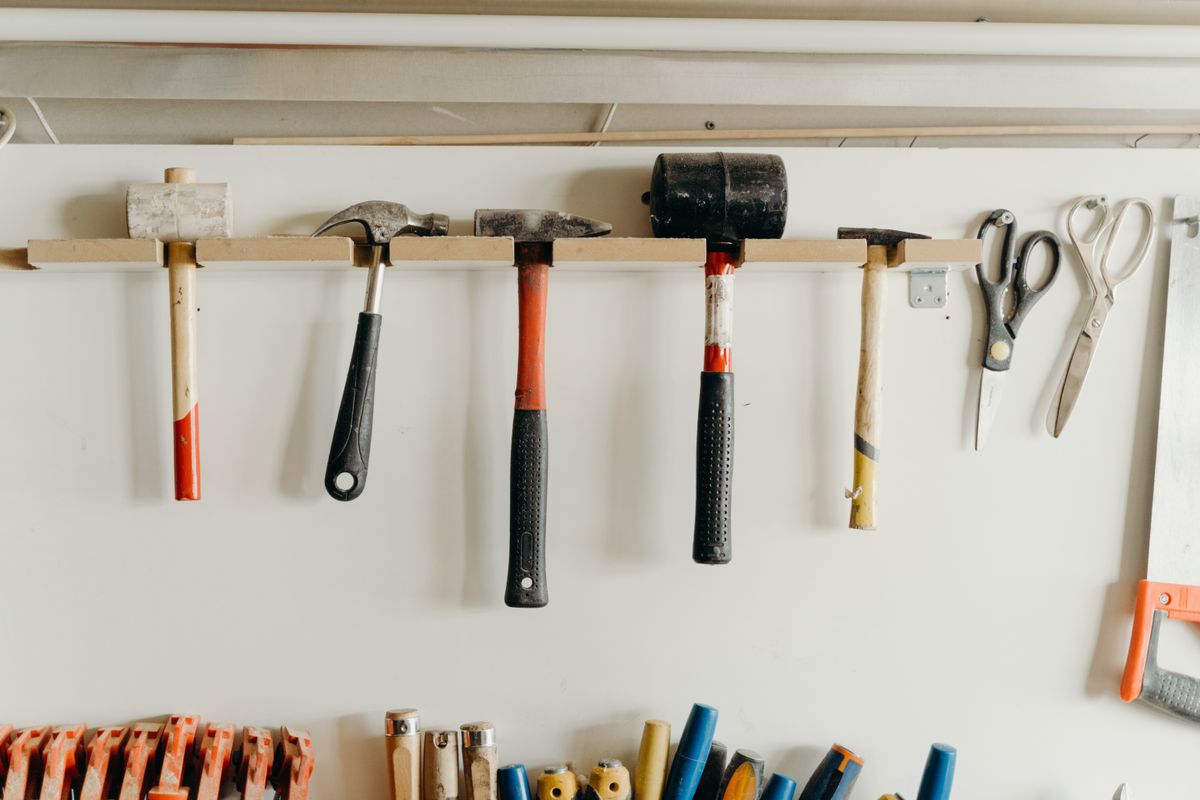
You do not need a huge space to build beautiful things. Many woodworkers turn out furniture from a single garage bay, a basement corner or even a backyard shed. What makes a small shop work is the layout. This guide shares practical small woodworking shop layout ideas that help you fit more into less space and work more safely.
Start With Your Workflow
Wood moves through a shop in a fairly predictable order:
- Storage: boards and sheet goods arrive and wait.
- Breakdown: long boards and sheets are cut to rough size.
- Milling and cutting: parts are cut to final size.
- Assembly: parts are joined and glued.
- Finishing: sanding, staining and sealing.
Arrange your space so material flows in that order, ideally from the door toward the back. You will spend less time carrying boards around tools.
Make the Workbench the Center
In a small shop the workbench is the heart of everything. It is your assembly table, layout station and often your outfeed support. Place it where you can walk around at least two sides. If space is very tight, a sturdy wall-mounted or folding bench can work. Keep it at a comfortable height, roughly at your wrist when your arms hang at your sides.
Put Tools on Wheels
Mobile bases are the single biggest space saver in a small shop. With tools on locking casters you can:
- Roll a tool to the center of the room to use it
- Push it back against the wall when you are done
- Rearrange the shop for each project
Tools that work well on wheels include a table saw, miter saw station, planer, router table and dust collector.
Think Vertically
Floor space is precious. Walls are not.
- French cleats: a simple system of angled wall strips that lets you hang and rearrange tool holders.
- Pegboard: good for lightweight hand tools you reach for often.
- Lumber racks: store boards horizontally on wall brackets instead of leaning them in a corner.
- Overhead storage: ceiling racks are ideal for long offcuts and seasonal items.
Leave Room for Long Boards
Saws need space in front of and behind the blade for long boards and sheet goods. When planning, check the infeed and outfeed clearance of each cutting tool. A common trick is to position the table saw so long boards can pass through the garage door or along the longest wall.
Combine Functions
In a small space, one surface often does several jobs:
- A table saw extension wing can double as a router table.
- The workbench can be the same height as the table saw so it serves as outfeed support.
- A rolling cart can hold a miter saw and store blades and clamps underneath.
Light and Power
Good lighting makes small shops feel bigger and work safer. Bright LED shop lights spread evenly across the ceiling remove shadows on your work. Plan outlets where the tools will actually be used to avoid extension cords across the floor. For any new wiring, hire a licensed electrician and follow local codes.
Dust and Air
Dust builds up fast in a small room. Plan a spot for a shop vacuum or dust collector early, and keep a path for fresh air. Our guide to dust collection for a small shop covers simple options that fit tight spaces.
Sample Layouts
- One-car garage: lumber rack on the side wall, mobile table saw in the center, workbench at the back, finishing area near the door for ventilation.
- Basement corner: wall-mounted bench, hand tools on French cleats, a compact miter saw on a rolling cart, and a shop vac with a cyclone separator.
- Backyard shed: bench under the window for light, tools on the walls, and project storage in the loft or rafters.
Plan It on Paper First
Measure your space and each tool, cut paper or cardboard shapes to scale, and move them around on a floor plan. It is much easier to rearrange paper than a 300-pound machine.
Final Thoughts
A small shop can be a very productive one when the layout follows your workflow, tools are mobile, and walls do the storage work. If you want a complete planning guide for tools, layout, power and dust control in tight spaces, see our review of The Ultimate Small Shop.
Leave a Reply